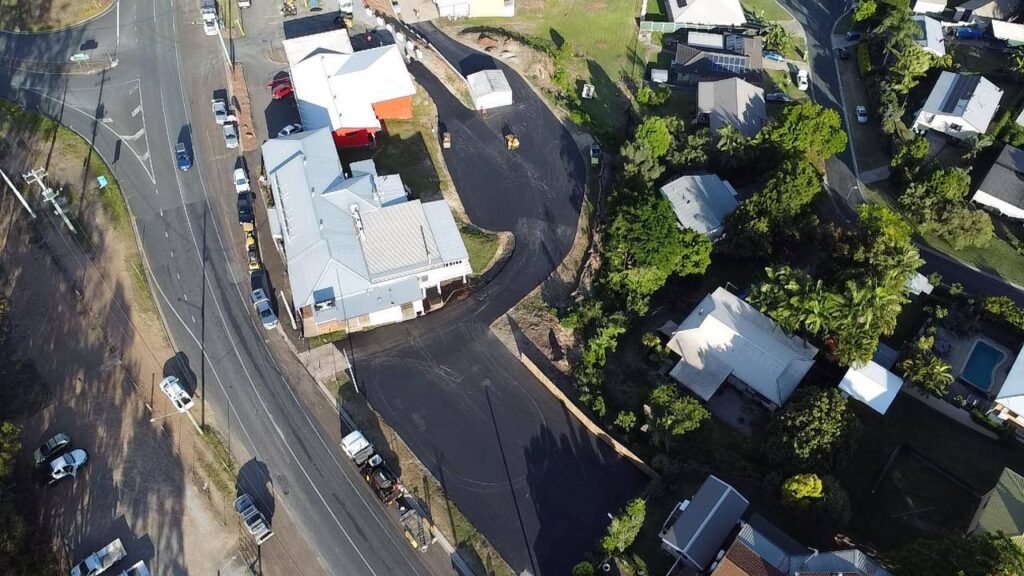
When looking at a completed asphalt or bitumen surface, most attention naturally goes to the smooth pavement on top. However, the long-term performance of a road depends just as heavily on what cannot be seen. Beneath the finished surface is the road base, which provides the stability and support needed to withstand traffic, weather and everyday use.
For property owners and businesses in Nerang, QLD, proper road base preparation is one of the most important stages of any asphalt or bitumen surfacing project. At Nerang Surfacing Solutions, we understand that achieving a durable finished pavement starts with preparing the foundation correctly rather than relying on the surface layer to compensate for weaknesses underneath.
What Is the Road Base?
The road base forms part of the structural foundation beneath the asphalt or bitumen surface. Its role is to provide a stable platform and distribute vehicle loads across the pavement structure.
Depending on the condition and intended use of the site, preparation may involve:
- Removing unsuitable or unstable material
- Shaping the underlying ground
- Installing suitable base material
- Establishing correct pavement levels
- Compacting the base thoroughly
- Creating appropriate falls for drainage
Each of these stages contributes to the performance of the completed pavement.
A Strong Surface Needs Stable Support
Asphalt is durable, but it cannot perform properly if the material beneath it moves excessively or lacks adequate strength.
When vehicles travel across a road, their weight is transferred through the asphalt into the supporting layers below. A properly prepared road base helps distribute these loads rather than allowing excessive pressure to concentrate in individual areas.
What Happens When the Base Is Weak?
Problems beneath the pavement eventually tend to become visible at the surface.
A poorly prepared or unstable base can contribute to:
- Cracking
- Rutting
- Localised sinking
- Uneven pavement
- Pothole development
- Premature surface deterioration
Simply applying additional asphalt over an unstable area may improve its appearance temporarily without correcting the underlying cause.
Correct Compaction Is Critical
Placing suitable road base material is only part of the preparation process. The material also needs to be compacted properly.
Compaction creates a dense, stable layer that is better able to support traffic without excessive settlement.
Correct compaction helps:
- Reduce movement within the pavement
- Improve load-bearing performance
- Limit uneven settlement
- Provide consistent support for the surface
- Maintain pavement levels over time
If sections are compacted inconsistently, some areas may settle more than others, eventually creating depressions or cracks in the asphalt above.
Grading Helps Establish the Right Road Profile
Road base preparation also provides an opportunity to establish the correct shape of the pavement before surfacing begins.
The road should have appropriate levels and falls so that water can move away efficiently rather than remaining on the pavement.
Drainage Begins Beneath the Finished Surface
Good drainage is not something that should be considered only after the asphalt has been installed. The underlying formation and road base need to support the intended drainage profile.
Correct grading can help prevent:
- Standing water
- Low spots
- Water entering vulnerable pavement areas
- Softening of supporting layers
- Erosion around pavement edges
For road surfaces in Nerang, QLD, effective water management is an important part of achieving dependable long-term performance.
Water Can Weaken an Otherwise Good Pavement
Moisture is one of the most common contributors to pavement deterioration. When water penetrates through cracks or poorly drained areas and reaches the supporting layers, the road base may gradually lose stability.
Traffic passing over the weakened area then creates additional movement, which can result in surface cracking and potholes.
This is why recurring potholes are sometimes a symptom of a deeper problem rather than an isolated defect.
Why Do Some Repairs Keep Failing?
If the same section of pavement requires repeated repairs, there may be an unresolved issue within the base.
Possible causes include:
- Poor drainage
- Weak supporting material
- Inadequate compaction
- Ongoing settlement
- Water infiltration
- Insufficient pavement strength for the traffic using it
Investigating these factors can provide a more effective solution than repeatedly repairing only the visible surface.
Road Base Requirements Depend on How the Surface Will Be Used
Not every road or paved area experiences the same demands. A lightly used private accessway will place different stresses on the pavement compared with an area regularly carrying heavier vehicles.
Before preparing the base, professional contractors should consider factors such as:
- Expected traffic volume
- Types of vehicles
- Frequency of use
- Existing ground conditions
- Drainage requirements
- Intended purpose of the pavement
Matching the pavement structure to its actual use helps improve long-term reliability.
Edge Support Should Not Be Overlooked
The edges of a road can become vulnerable when they are poorly supported or repeatedly exposed to vehicle loading.
Once an edge begins breaking away, cracks and deterioration can gradually progress towards the centre of the pavement.
Proper road base preparation should therefore consider the full pavement width and provide adequate support to vulnerable edge areas.
Preparation Matters During Resurfacing Too
Road base preparation is not limited to completely new pavement construction. When an existing asphalt or bitumen surface is being resurfaced, the condition of the underlying structure should still be considered.
If the existing pavement has widespread sinking, recurring potholes or substantial deformation, simply covering those defects may not produce the desired long-term result.
Where necessary, unstable sections should be addressed before resurfacing proceeds.
Better Preparation Supports Longer Surface Life
A well-prepared foundation allows the asphalt or bitumen above it to perform as intended. Instead of asking the surface layer to compensate for movement and instability underneath, the entire pavement structure works together.
This can contribute to:
- More consistent surface levels
- Better resistance to traffic loads
- Reduced risk of premature defects
- More effective drainage
- Improved long-term pavement performance
The quality of the preparation is therefore just as important as the quality of the finished surfacing material.
Why Professional Road Base Preparation Matters
Road base construction requires careful assessment rather than a one-size-fits-all approach. Ground conditions, drainage, traffic and the existing pavement all need to be considered before the appropriate preparation method can be determined.
At Nerang Surfacing Solutions, we approach asphalt and bitumen surfacing and resurfacing projects in Nerang, QLD, with attention to the complete pavement structure. By identifying weaknesses beneath the surface and preparing the base correctly, we can help create a stronger foundation for reliable long-term performance.
Conclusion
Proper road base preparation is essential because the strength of an asphalt or bitumen surface ultimately depends on the support beneath it. Correct materials, thorough compaction, accurate grading and effective drainage all contribute to a pavement that can withstand regular traffic without unnecessary movement or premature deterioration.
For property owners and businesses in Nerang, QLD, focusing on the foundation from the beginning can help prevent recurring potholes, rutting, cracking and uneven settlement.
If you are planning a new surface or an existing pavement is showing signs of underlying failure, contact Nerang Surfacing Solutions for a professional assessment. We can evaluate the condition of the site and recommend an appropriate asphalt or bitumen surfacing solution based on what the pavement actually requires.
Call us on: 07 3113 9392
Click here to find out more about Nerang Surfacing Solutions
Click here to complete our contact form and see how we can help with your surfacing needs.