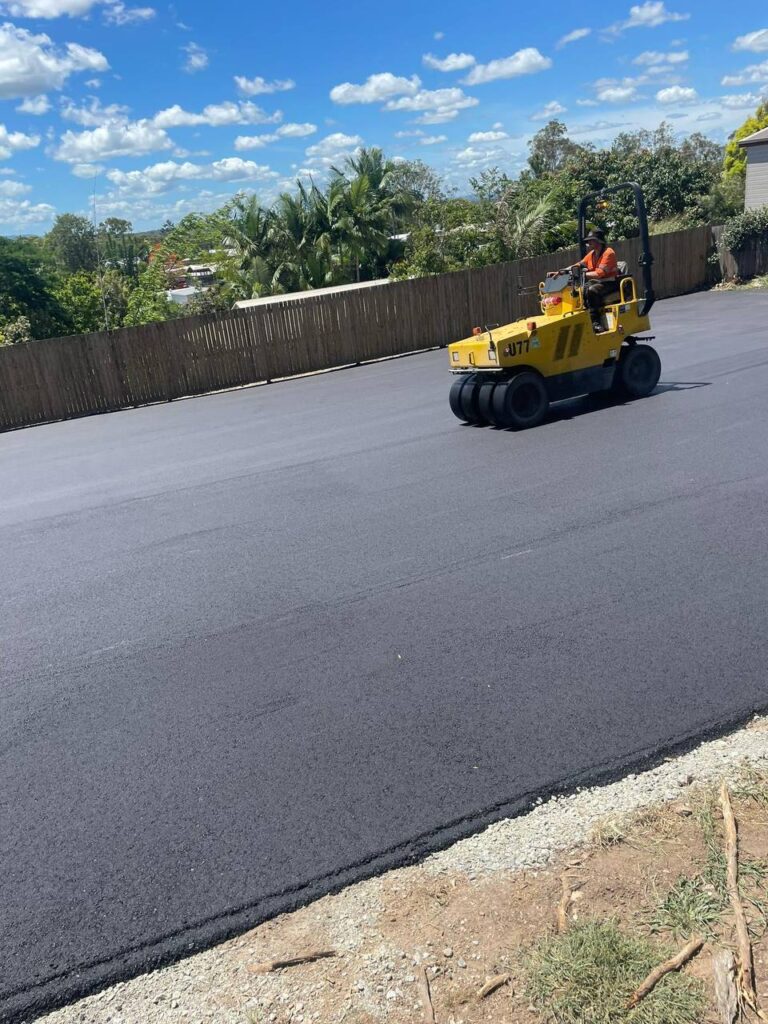
When an asphalt surface begins to deteriorate, deciding how to repair it is not always straightforward. A few isolated potholes may only require targeted patching, while widespread surface wear could make resurfacing more appropriate. If deterioration extends into the supporting pavement, reconstruction may need to be considered instead.
The important point is that visible damage does not always reveal what is happening underneath. For property owners and businesses in Nerang, QLD, choosing between asphalt patching, resurfacing and reconstruction should be based on the condition of the complete pavement rather than appearance alone.
At Nerang Surfacing Solutions, we assess the extent and cause of pavement deterioration before determining which approach is appropriate for the existing surface.
Why Choosing the Correct Asphalt Repair Matters
Asphalt relies on several pavement layers working together. The asphalt provides the finished traffic surface, while the materials underneath distribute vehicle loads and provide structural support.
When deterioration is confined to the upper pavement, extensive reconstruction may be unnecessary. Conversely, resurfacing over an unstable foundation may leave the underlying problem unresolved.
The appropriate treatment depends on factors such as:
- The extent of cracking
- Number and location of potholes
- Condition of previous repairs
- Presence of rutting or settlement
- Stability of the road base
- Drainage performance
- Traffic demands
- Overall condition of the existing asphalt
Understanding these factors makes it possible to target the actual level of pavement failure.
When Is Asphalt Patching Appropriate?
Patching is generally suited to localised defects where most of the surrounding pavement remains in serviceable condition.
Rather than replacing or resurfacing a much larger area, the failed section can be removed, prepared and repaired.
Patching may be appropriate for:
- Isolated potholes
- Small areas of surface failure
- Localised cracking
- Damaged pavement edges
- Individual failed sections
- Limited areas around previous repairs
The condition underneath the damaged asphalt still matters. A patch needs stable support if it is to perform effectively.
A Pothole Does Not Automatically Mean the Entire Surface Is Failing
An isolated pothole can sometimes develop while the majority of the pavement remains sound.
Where the underlying material is stable and deterioration has not spread significantly, repairing the affected section may be sufficient.
This allows serviceable pavement to remain undisturbed while attention is concentrated where it is actually needed.
When Might Patching Not Be Enough?
Repeated patching can become a warning sign when new failures continue appearing across the same surface.
If potholes repeatedly return, repairs begin sinking or cracks continue developing around patched sections, there may be an underlying pavement problem.
Possible causes include:
- Weak road base
- Water penetration
- Poor drainage
- Localised settlement
- Inadequate pavement support
- Repeated heavy vehicle loading
Continuing to patch the surface without addressing these conditions may not resolve the cause of the deterioration.
When Should Asphalt Resurfacing Be Considered?
Resurfacing can be appropriate when the existing pavement structure remains reasonably stable but the upper asphalt surface has become generally worn.
Instead of treating numerous minor defects individually, the pavement is prepared and a new asphalt surface is installed over the serviceable structure underneath.
Signs That Resurfacing May Be Appropriate
An existing asphalt surface may be suitable for resurfacing where there is:
- General surface ageing
- Widespread but relatively shallow wear
- Numerous stable previous patches
- Loss of surface consistency
- Minor cracking across larger areas
- A worn or rough driving surface
- Localised defects that can be repaired beforehand
Resurfacing can restore a more consistent pavement while retaining the parts of the existing structure that remain serviceable.
Preparation Is Essential Before Resurfacing
A new asphalt layer should not simply be used to conceal existing defects.
Before resurfacing, potholes, unstable patches, significant cracks and damaged edges should be assessed. Localised failures may require repair before the new surface is installed.
Surface levels also need consideration. If the existing pavement contains depressions, substantial rutting or drainage problems, these issues may require correction as part of the preparation.
Why Can Existing Damage Reappear Through a New Surface?
A resurfaced pavement still relies on the structure underneath it.
If an unstable section continues moving after new asphalt has been installed, that movement can eventually affect the surface above.
This is particularly important where there are deep cracks, settlement or failed pavement layers. Covering the visible damage does not restore structural support underneath it.
When Is Asphalt Reconstruction More Appropriate?
Reconstruction becomes relevant when deterioration is no longer limited primarily to the asphalt surface.
If the supporting pavement has significantly weakened, it may need to be removed and rebuilt before a dependable asphalt surface can be established.
Signs that deeper pavement failure may be present include:
- Extensive structural cracking
- Significant rutting
- Large sunken sections
- Widespread pavement movement
- Numerous recurring potholes
- Repeated failure of previous repairs
- Unstable material underneath damaged asphalt
- Major deformation under regular traffic
These conditions require assessment because they can indicate that the road base or other supporting layers are no longer providing consistent support.
What Does Asphalt Reconstruction Involve?
Reconstruction addresses the pavement from a greater depth than patching or resurfacing.
Failed materials are removed as necessary so the underlying condition can be corrected. The pavement can then be rebuilt with suitable preparation, grading and compaction before the asphalt surface is reinstated.
The purpose is to restore the structural foundation of the pavement rather than merely improve the upper surface.
Does One Failed Area Mean Everything Needs Reconstruction?
Not necessarily.
Pavement deterioration is not always uniform. One section may have significant base failure while another remains structurally sound.
A condition-based approach can identify areas requiring deeper reconstruction while preserving sections that continue to provide adequate support.
This is one reason a professional pavement assessment is valuable before deciding how extensive the work needs to be.
Cracking Can Help Indicate the Appropriate Treatment
The type and distribution of cracks can provide useful information about pavement condition.
A few isolated cracks are very different from widespread interconnected cracking accompanied by movement and settlement.
Cracks become particularly important when they:
- Continue widening
- Form extensive interconnected patterns
- Surround sunken areas
- Appear around repeatedly failing patches
- Allow water into the pavement
- Occur alongside potholes or rutting
The cause of cracking should be considered before deciding whether patching, resurfacing or deeper pavement work is appropriate.
What Do Recurring Potholes Tell You?
A pothole that appears once may remain a localised problem. A pothole that repeatedly returns in the same location can indicate something more substantial.
Recurring potholes may develop because the material underneath the asphalt has weakened. If the base moves whenever vehicles pass over it, the surface above can continue breaking apart.
In these circumstances, repairing the visible hole without addressing unstable material underneath may result in another failure.
The depth of deterioration therefore needs to guide the repair.
Drainage Can Influence Every Repair Decision
Water is an important factor in asphalt pavement performance.
Cracks and damaged areas can allow moisture to penetrate into supporting pavement layers. Poor grading can also create depressions where rainfall repeatedly collects.
Over time, these conditions can contribute to weakening, movement and pothole formation.
Signs of drainage-related problems include:
- Standing water after rainfall
- Potholes concentrated in low areas
- Erosion around pavement edges
- Cracking around depressions
- Water-filled wheel ruts
- Repeated failures along the same section
Addressing drainage may be an important part of patching, resurfacing or reconstruction, depending on the condition of the pavement.
Rutting and Settlement Need Closer Investigation
Rutting occurs when regular wheel paths develop visible depressions. Settlement occurs when individual sections of pavement sink relative to surrounding areas.
Minor surface irregularities do not necessarily indicate complete structural failure. Significant or progressive deformation, however, can suggest movement deeper within the pavement.
If a road, driveway, car park or hardstand is visibly changing shape under traffic, simply installing additional asphalt on top may not address the reason for that movement.
Consider How the Asphalt Is Being Used
The appropriate repair also depends on what the pavement needs to support.
An area carrying regular heavy vehicles experiences different loading from a lightly used driveway. Entrances, turning points, loading areas and frequently travelled wheel paths can also receive concentrated stress.
A pavement assessment should therefore consider:
- Vehicle types
- Frequency of traffic
- Regular turning movements
- Braking areas
- Stationary vehicle loads
- Existing pavement construction
Repairing the surface without considering its ongoing use can overlook an important contributor to deterioration.
Patching, Resurfacing or Reconstruction: What Is the Practical Difference?
The three approaches address different levels of pavement deterioration.
Patching
Patching targets individual damaged areas while retaining the surrounding pavement. It is generally suited to localised defects where adequate structural support remains.
Resurfacing
Resurfacing restores a larger worn surface while making use of an existing pavement structure that remains sufficiently stable. Failed local areas need to be prepared before the new asphalt is installed.
Reconstruction
Reconstruction addresses deeper pavement failure where the supporting structure has deteriorated and needs to be rebuilt.
The correct option is therefore not necessarily the most extensive one. It is the treatment that matches the actual depth and extent of deterioration.
Why Professional Assessment Is Important
Two asphalt surfaces can display similar cracks and potholes while requiring very different repairs.
One may have a sound foundation and need only targeted patching. Another may have widespread surface wear but remain suitable for resurfacing. A third may contain significant base failure requiring deeper reconstruction.
At Nerang Surfacing Solutions, we assess asphalt and bitumen surfaces in Nerang, QLD, with attention to visible deterioration, pavement stability, drainage, previous repairs and expected traffic demands. This helps determine which parts of the existing pavement can be retained and which require additional attention.
Conclusion
Whether your asphalt needs patching, resurfacing or reconstruction depends on how far deterioration has progressed.
Patching is generally appropriate for isolated defects where the surrounding pavement remains stable. Resurfacing can restore a worn or heavily repaired upper surface when the supporting pavement remains serviceable. Reconstruction becomes more relevant when significant failure extends into the road base or other structural layers.
Recurring potholes, widespread cracking, substantial rutting, settlement and drainage problems are all signs that the pavement should be assessed more closely rather than simply covered with new asphalt.
For property owners and businesses in Nerang, QLD, Nerang Surfacing Solutions provides professional asphalt and bitumen resurfacing and repair solutions based on the actual condition of the pavement. If your surface is deteriorating and you are unsure whether it needs patching, resurfacing or more substantial preparation, contact our team to arrange an assessment and discuss the appropriate approach.
Call us on: 07 3113 9392
Click here to find out more about Nerang Surfacing Solutions
Click here to complete our contact form and see how we can help with your surfacing needs.